How often should pavers be sealed in Illinois?+
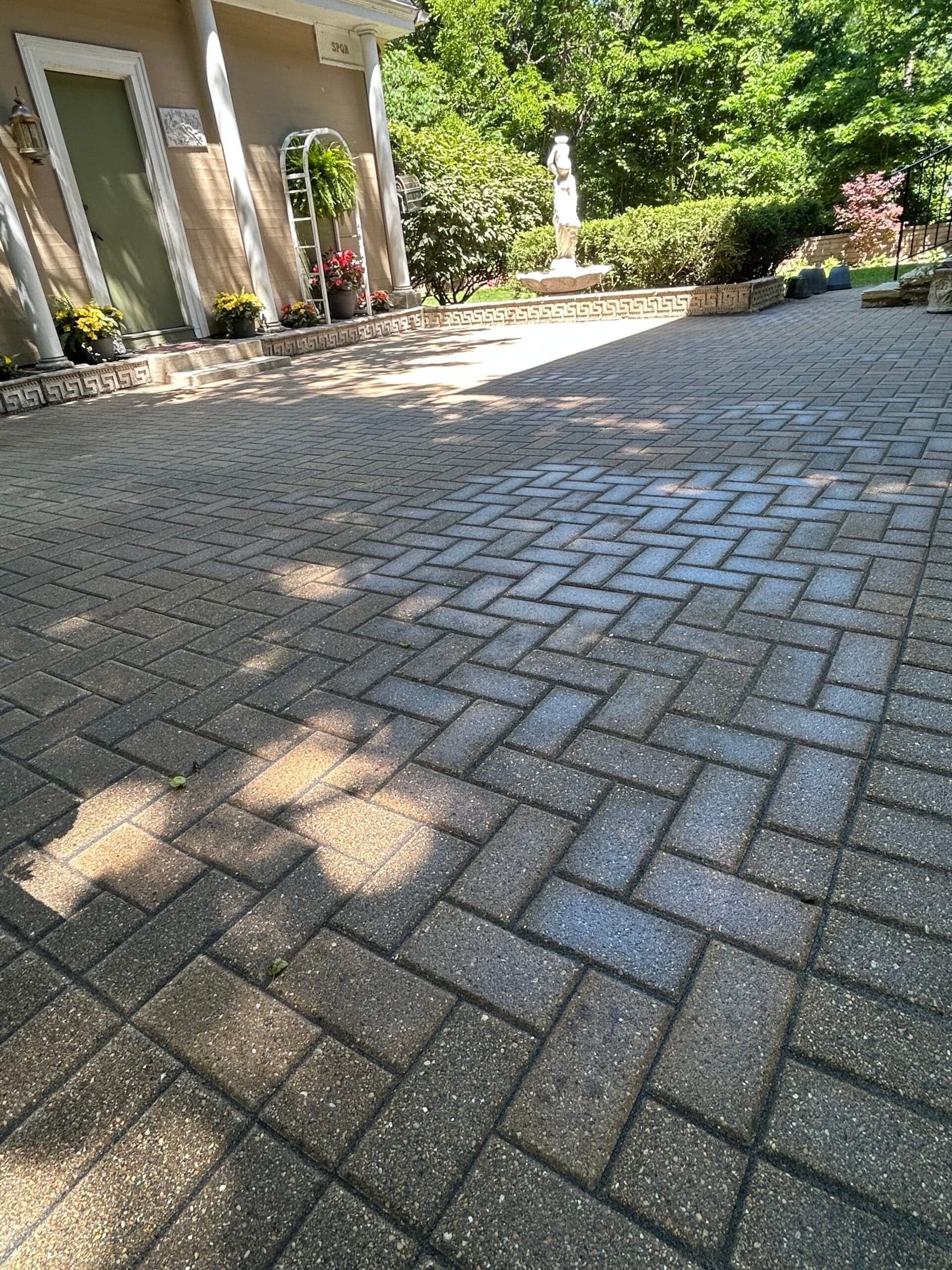
For most residential properties in Illinois, we recommend resealing pavers every two to three years. Illinois has a particularly demanding climate for hardscaping — harsh winters with repeated freeze-thaw cycles, road salt and deicers that migrate onto surfaces, and hot, UV-intensive summers all break down sealer faster than you'd see in milder climates. High-traffic areas like driveways may need attention closer to every two years, while a lightly used backyard patio might hold up well for three years or more. The best indicator is a simple water test: pour a small amount of water onto your pavers. If it beads up, your sealer is still doing its job. If it soaks in quickly, it's time to reseal. Regular maintenance sealing is far more cost-effective than waiting until pavers are severely faded, stained, or structurally compromised.
Do you clean pavers before sealing?+
Absolutely — and this is non-negotiable for us. Applying sealer over dirty, algae-covered, or residue-laden pavers is one of the most common mistakes in this industry, and it leads to poor adhesion, uneven appearance, and a sealer that fails well before it should. Our process always begins with a thorough professional cleaning that removes organic growth, surface staining, old sealer residue, and debris from the joints. We also let the surface dry completely before applying any sealer, because moisture trapped beneath the coating can cause cloudiness, bubbling, and premature peeling. The cleaning phase isn't just prep — it's a meaningful part of the service, and it's reflected in the quality and longevity of the final result.
What type of sealer do you use?+
We use professional-grade sealers that are specifically formulated for the type of paver material we're working with — whether that's concrete pavers, natural stone, or brick sealing Geneva projects that require a breathable, penetrating product. We work with both water-based and solvent-based sealers depending on the application, and we offer a choice of finish levels from natural matte to a high-gloss wet look. We avoid consumer-grade products that you'd find at a home improvement store, which tend to be thinner, less durable, and more prone to peeling and hazing. During our initial assessment, we'll discuss your preferences and recommend the best product for your specific pavers, the amount of traffic the area receives, and how you want the finished surface to look and perform.
How long does paver sealing last in cold climates?+
In a climate like Illinois, a properly applied professional sealer typically lasts between two and four years before it needs to be refreshed. The biggest variables are traffic load, sun exposure, and how much contact the surface has with deicers and salt during winter. South-facing driveways that get direct sun and heavy vehicle use will see sealer wear faster than a shaded backyard patio. Quality of application matters enormously too — a thin, rushed application won't hold up the way a thorough, properly prepared job will. That's why we emphasize prep and proper dry time before sealing. We also recommend that homeowners avoid harsh chloride-based ice melts on sealed surfaces, as these are particularly aggressive on both sealers and the pavers themselves. Calcium chloride and sand-based alternatives are gentler options.
Can sealing fix faded pavers?+
Sealing can significantly restore and enhance the color of faded pavers, but the degree of improvement depends on what caused the fading and the condition of the pavers themselves. UV oxidation — the most common cause of fading in Illinois — responds very well to a quality sealer, particularly a wet-look or color-enhancing product that brings out the original tones of the material. Deep, structural fading or staining that has penetrated the paver body itself may not fully reverse, but in most cases the improvement is dramatic enough that homeowners are genuinely surprised. Think of it like conditioning leather — the product feeds and enriches the surface, bringing back life and depth that weathering stripped away. We can give you an honest assessment during our initial walkthrough of what level of restoration you can realistically expect from your specific pavers.