How often should I have my house washed in Geneva IL?+
For most homes in the Geneva area, an annual exterior wash is a reasonable baseline. That said, several factors can push that frequency higher. Homes with significant tree coverage — especially those with mature oaks or maples close to the structure — tend to accumulate algae, pollen, and organic debris more quickly on north- and east-facing walls. Homes located near the Fox River corridor or in low-lying areas may also see faster biological growth due to ambient moisture. If you notice green or black streaking on your siding, chalky oxidation on vinyl, or visible mold and mildew forming, those are clear signs it's time to schedule a wash regardless of when the last one was done. On the other end of the spectrum, some homeowners in open, sunny lots find that every 18 to 24 months is sufficient. When you call for an estimate, we're happy to give you an honest recommendation based on your home's specific conditions rather than push an unnecessary service.
Is soft washing safe for my siding?+
Yes — in fact, soft washing is specifically designed to protect your siding while delivering a more effective clean than high-pressure washing alone. Traditional high-pressure washing can force water behind vinyl panels, strip paint from wood siding, damage caulking around windows and doors, and even compromise fiber cement if the pressure is too high or the angle is wrong. Soft washing avoids all of those risks by relying on the cleaning chemistry to do the heavy lifting rather than raw water pressure. The detergents we use are formulated to target algae, mold, mildew, and dirt without degrading your siding material or finish. We adjust our technique based on your specific siding type, so whether you have vinyl, Hardie board, cedar, brick, or stucco, the approach is calibrated accordingly. Soft washing is endorsed by many siding manufacturers as the preferred cleaning method, and it's what LFG Wash uses as our standard for residential exterior house washing.
How long does a house wash take?+
The short answer is that most single-family homes in the Geneva area take between one and three hours from setup to final rinse. A smaller ranch-style home with straightforward siding can be completed closer to the one-hour mark. A larger two-story home with extensive square footage, multiple dormers, or significant buildup may run closer to three hours or slightly more. If you're bundling additional services — window cleaning, gutter cleaning, or a driveway wash — plan for additional time accordingly. We'll give you a realistic time estimate when we provide your quote so you can plan your day. Our goal is always to work efficiently without cutting corners, and we'd rather take the time to do the job right than rush through it and leave you with missed spots.
Will house washing remove mold and mildew?+
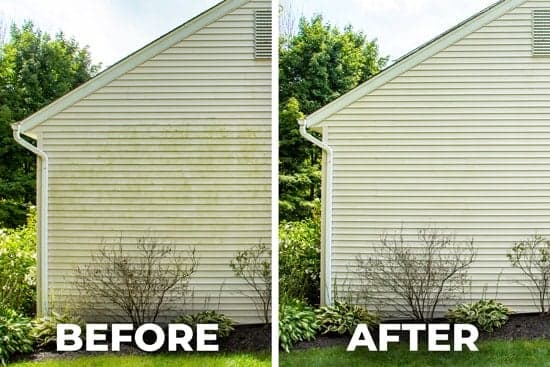
Yes, and this is actually one of the most important reasons to invest in regular exterior house washing. The black streaking and green film you see on siding is almost always biological — algae, mold, mildew, or a combination of all three. These organisms aren't just cosmetic problems. Left unchecked, mold and mildew can work their way into seams, caulking, and wood components, causing deterioration over time that leads to costly repairs. Our soft wash process applies a cleaning solution that kills mold and mildew at the root rather than simply rinsing surface growth away. This means the results last longer because the biological material is actually eliminated, not just displaced. If you're seeing significant dark staining on your home's north-facing walls or under roof overhangs — common spots in Geneva IL given our climate — a professional house wash will address that directly and help prevent it from returning as quickly.
What is the difference between pressure washing and soft washing a house?+
This is one of the questions we get most often, and it's worth explaining clearly. Pressure washing relies primarily on high-velocity water to remove dirt and buildup from a surface. It's highly effective for hard, durable surfaces like concrete driveways, brick pavers, and stone — materials that can withstand significant force without damage. Soft washing, on the other hand, uses a low-pressure water delivery system combined with specialized cleaning detergents. The chemicals do the actual cleaning work; the water is mainly used to apply the solution and rinse it away. For residential siding — which is far more delicate than concrete — soft washing is almost always the right choice. It cleans more thoroughly because it kills biological growth rather than just blasting it off, it's safer for your home's exterior materials, and it reduces the risk of water intrusion. At LFG Wash, we use soft washing as our standard method for exterior house washing and reserve pressure washing for appropriate hard surfaces. Some companies use the terms interchangeably in marketing, which can be misleading — so it's always worth asking any provider exactly what method and pressure settings they use on siding.